Wedding Planning
A–Z Wedding Glossary: Essential Terms Couples Should Know
Decode wedding planning language with an A–Z glossary covering venues, catering, bar service, rentals, timelines, weather plans, photography, and guest experience.
Planning an intimate or destination wedding comes with a whole new language—especially once you start talking to venues, planners, caterers, bartenders, florists, and rental companies. This glossary is built for new brides who are actively Googling unfamiliar terms (meal styles, bar service, rentals, timelines, weather plans, and vendor lingo), with a nod to the kind of intimate, nature-forward celebrations hosted at Koa’s Events.
Most Googled Wedding Terms (Quick Answers for Brides)
These are some of the most searched wedding terms online, especially by couples planning destination, outdoor, or intimate weddings. If you’ve found yourself Googling these late at night—you’re not alone.
What is a micro wedding?
A micro wedding is a small wedding, typically 20–50 guests, that includes traditional elements (ceremony, reception, meal) on a more intimate scale.
What’s the difference between a micro wedding and an elopement?
A micro wedding includes a small guest list and structured reception, while an elopement usually has 2–20 guests and a simpler timeline.
What is a full bar vs beer and wine only?
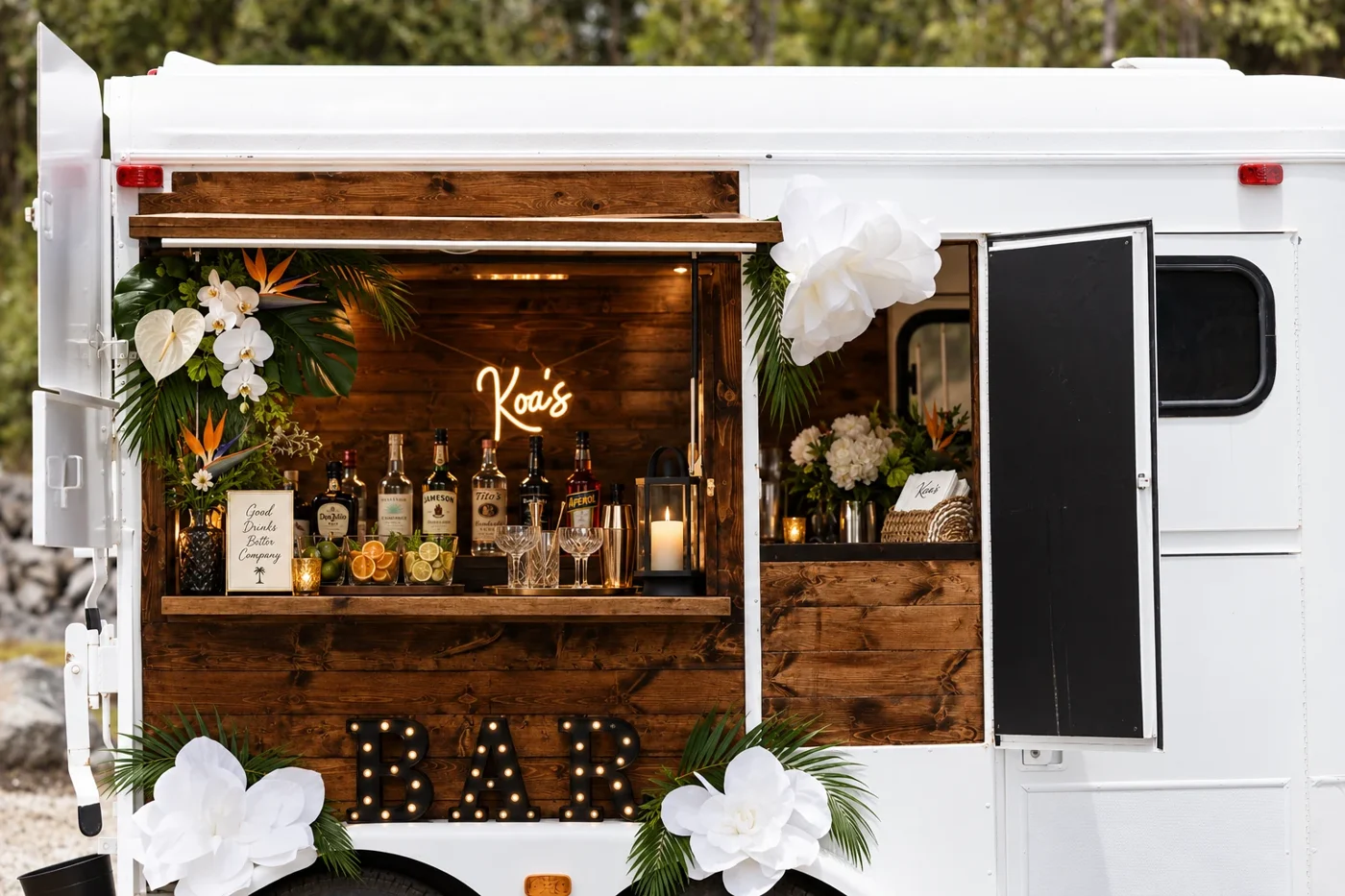
A full bar includes spirits and cocktails; beer-and-wine-only bars limit alcohol options and often reduce cost and staffing needs.
What is a dry wedding?
A dry wedding serves no alcohol. Couples may choose this for personal, cultural, or budget reasons.
What does “venue buyout” mean?
A venue buyout means the couple rents the entire venue exclusively, ensuring privacy and no overlapping events.
What is a plated dinner vs buffet?
A plated dinner is served to seated guests; a buffet allows guests to serve themselves. Plated meals feel formal, buffets feel flexible.
What is cocktail-style reception?
A reception with passed appetizers and food stations instead of assigned seating—ideal for mingling and relaxed pacing.
What is a rain plan for an outdoor wedding?
A rain plan is a pre-determined alternative layout in case of weather changes, allowing the wedding to continue smoothly.
What does “quiet hours” mean at a wedding venue?
Quiet hours limit amplified sound after a certain time to respect neighbors and the environment.
What is a wellness wedding?
A wellness wedding focuses on calm, connection, nature, and guest experience rather than packed schedules or traditions.
Each letter includes four common (and commonly misunderstood) wedding terms, explained in plain English.
A
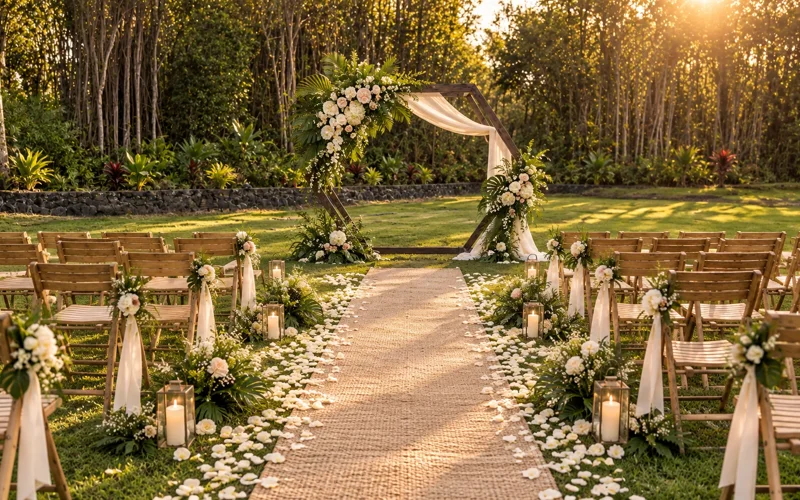
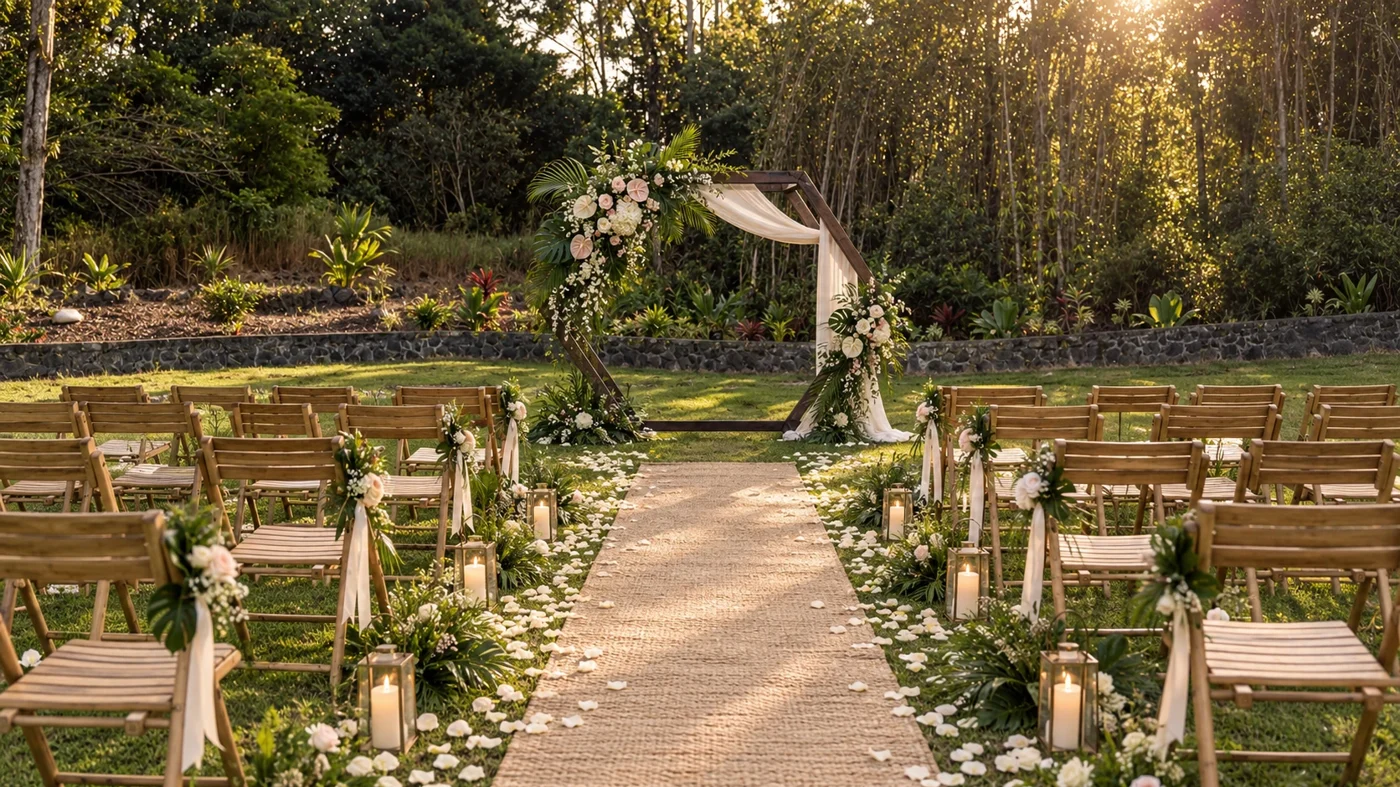
Aisle Style (Straight / Curved / Spiral) The layout of your ceremony entrance path, which affects guest seating and your “walk down the aisle” photos.
All-Inclusive vs. À La Carte “All-inclusive” bundles multiple services; “à la carte” means you select and pay for each item separately (venue, rentals, catering, bar, etc.).
Arrival Window The scheduled time guests and vendors are permitted to arrive—important for parking flow and a calm start.
Attire Code (Formal / Cocktail / Beach Formal / Garden Party) The dress expectation you set for guests—helps everyone dress appropriately for the setting and weather.
B
Backup Plan (Rain Plan) Your defined alternative layout if weather changes—especially important for outdoor and rainforest venues.
Bar Package (Hosted / Consumption / Cash Bar) Hosted = couple pays for all drinks. Consumption = you pay for what’s poured. Cash bar = guests pay.
Beer & Wine Only Bar A simplified bar option offering beer/wine (sometimes seltzers) without spirits—often lower cost and faster service.
Buyout Renting the venue exclusively so only your event is on-site during your rental period.
C
Cake Cutting Fee A catering fee charged if you bring an outside cake and the staff plates/serves it.
Catering Minimum The minimum dollar amount required by a caterer (or venue partner), regardless of guest count.
Ceremony-Only Rental Booking the venue just for the ceremony without a reception.
Corkage Fee A per-bottle fee charged when you supply your own wine/champagne and the venue/bar staff serves it.
D
Day-Of Coordinator (DOC)A coordinator who manages logistics and timeline on the wedding day (often starts 4–8 weeks prior).
Dry Wedding A wedding with no alcohol served—sometimes for personal, cultural, or budget reasons.
Destination Wedding A wedding where most guests travel in, usually requiring lodging, transportation, and a multi-day plan.
Drop-Off Catering Food delivered ready-to-serve with minimal staffing—lower cost, but you’ll need a plan for setup, service, and cleanup.
E
Elopement (Modern) An intentionally planned wedding, usually 2–20 guests, often including photography and florals.
Entertainment Cut-Off The time music must end or reduce due to venue rules, permits, or neighborhood quiet hours.
Event Insurance Liability insurance protecting you and the venue in case of accidents or damage.
Escort Card Display A setup that tells guests where to sit (different from place cards, which go at each seat).
F (4)
Family-Style Meal Service Platters placed on tables for guests to pass—feels warm and communal, but needs table space.
First Look A private moment where the couple sees each other before the ceremony—often reduces stress and improves timeline flexibility.
Flat Lay Photos Styled detail photos of invitation suite, rings, perfume, etc.—common in wedding photography.
Full Bar A bar serving spirits, mixers, beer, wine, and cocktails—requires more staffing, inventory, and sometimes permits.
G
Golden Hour The hour before sunset with flattering light—prime time for couple portraits.
Guest Count (Headcount) Your total number of attendees; it impacts catering, rentals, bar staffing, and layout.
Grab-and-Go Station A service style where guests pick up pre-portioned items quickly (useful for late-night snacks).
Gratuity (Service Charge vs Tip) Service charge may be mandatory and not always a tip; ask what portion goes to staff.
H
Hors d’Oeuvres (Passed vs Stationary) Passed = servers circulate bites; stationary = guests walk up to a display.
Hosted Bar The couple pays for all alcohol served, usually via package or consumption.
Hawaiʻi Marriage License Required to legally marry in Hawaiʻi; you apply online and meet a license agent in person on-island.
Hard Stop A strict end time for music, bar service, or venue use—affects your timeline and exit plan.
I
Inclusive Pricing Pricing that already includes taxes/fees—clarify what’s included so you can compare apples-to-apples.
Install/Strike Install = setup. Strike = breakdown/removal. Vendors often charge separately for these.
Intimate Wedding A smaller guest count wedding emphasizing connection and experience (often 20–80 guests).
Invitation Suite The full set of paper goods: invitation, RSVP, details card, envelopes, etc.
J (4)
Joint Vendor Walkthrough A venue visit with planner/caterer/photographer to align layout, timing, and logistics.
Just-Married Portraits A short photo session immediately after the ceremony—often the most emotional photos.
Juice Bar / Mocktail Bar A non-alcoholic specialty bar option that feels elevated without serving alcohol.
Judgment Call Clause (Weather) Some contracts specify who decides if weather triggers the rain plan (couple, venue, coordinator).
K
Koa’s Events A nature-forward, intimate event venue on Hawaiʻi Island suited for rainforest-style celebrations and retreat-like weddings.
Key Turnover Time The moment your rental period begins/ends—critical for setup and cleanup planning.
Kids Policy Rules on whether children are allowed—affects your guest list, seating, and vibe.
Kukulu / Cultural Sensitivity If incorporating Hawaiian cultural elements, ensure they’re respectful and guided by local expertise.
L
Late-Night Snack A second food moment (tacos, sliders, malasadas) served later to keep energy up.
Layout (Floor Plan) Your planned seating, dance floor, bar, buffet, lounge, etc.—affects flow and guest experience.
Liability Waiver A document guests or vendors may sign acknowledging certain risks (less common, but appears in some events).
Load-In / Load-Out The time windows for vendors to arrive, unload, and remove items.
M (
Micro Wedding A wedding typically 20–50 guests, combining intimacy with traditional structure.
Mocktail A non-alcoholic cocktail designed to feel like a “real drink,” often with syrups, herbs, and garnish.
Mobile Bar A bar service that brings its own equipment and bartenders; may have limits depending on venue utilities and rules.
Minimum Spend (Food/Bar) A required minimum dollar amount for catering or bar service, regardless of attendance.
N
No-Host Bar Another term for a cash bar—guests pay for their own drinks.
Noise Ordinance / Quiet Hours Rules requiring reduced sound after a certain time.
Non-Traditional Seating Benches, circles, semi-circles, or standing ceremonies—can feel intimate and photo-friendly.
NDA / Privacy Request Some couples request limited vendor posting if they want a more private event.
O
Open Bar Guests don’t pay per drink (host pays via package or consumption).
On-Consumption Bar You pay only for what guests actually drink—can reduce waste but can be unpredictable.
On-Site Ceremony + Off-Site Reception Splitting locations—common, but adds transportation and timing complexity.
Outdoor Lighting Plan A plan for lighting once it’s dark: string lights, uplights, lanterns—critical for ambience and safety.
P (4)
Passed Appetizers Bites served by staff moving through the crowd—keeps guests mingling.
Place Card vs Escort Card Escort card tells guests which table; place card marks the exact seat.
Plated Dinner A formal meal style where guests are served at their seats—needs more staff and timing.
Preferred Vendor List A list of vendors experienced at the venue—often smoother execution and fewer surprises.
Q
Quiet Hours The time when music must end or volume must reduce.
Quick Flip Rapidly transforming a space (ceremony setup to reception setup) within a short window.
Quantity Overages (Rentals) Extra charges if you exceed what was ordered (chairs, glassware, linens).
Quote vs Contract A quote is an estimate; a contract locks terms, dates, and policies.
R
Rainforest Venue A venue surrounded by lush greenery, often cooler and shaded—beautiful but requires weather prep.
Rental Period The exact hours you have access to the venue—includes setup and cleanup unless stated otherwise.
Room Reveal The moment the couple sees the fully styled reception space for the first time.
RSVP Deadline The date guests must respond—sets your final headcount for catering and rentals.
S
Seated Dinner vs Cocktail-Style Reception Seated dinner = assigned seating and meal. Cocktail-style = mingling with stations and small plates.
Service Charge A mandatory fee added by caterers/bars; clarify if it functions as gratuity.
Station Dinner (Action Stations) Guests walk up to different food stations (poke bar, carving station)—fun, flexible, and social.
Sunset Timing A major planning anchor for photos and ceremony start time, especially outdoors.
T
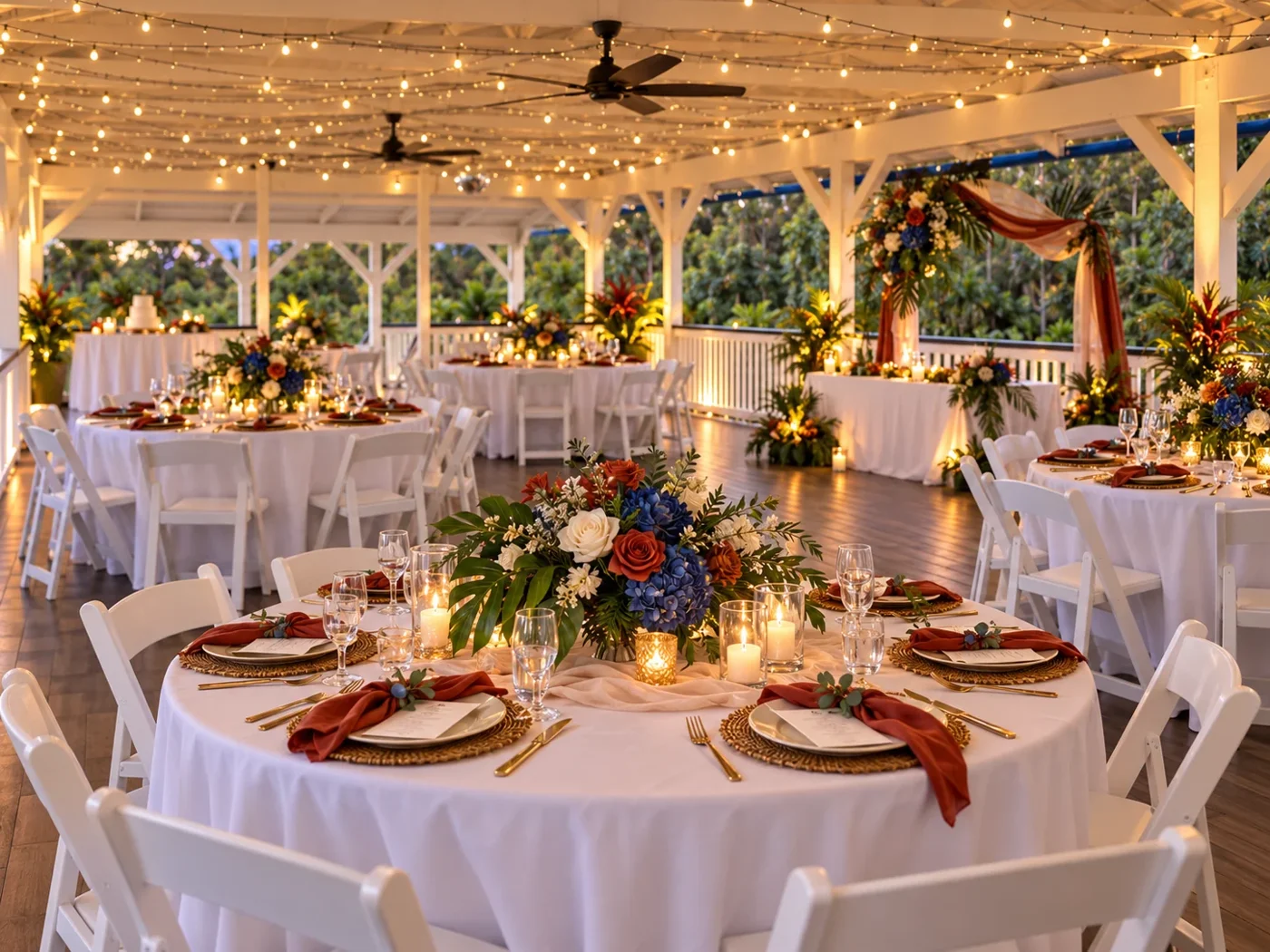
Tablescape Your full table design: linens, plates, glassware, florals, candles, menu cards.
Tasting A pre-wedding food trial with your caterer—sometimes included, sometimes paid.
Timeline Buffer Extra padding in your schedule to reduce stress and handle delays.
Toast Order The planned sequence of speeches; helps the DJ or coordinator keep things moving.
U
Unplugged Ceremony Guests keep phones away—improves presence and ceremony photos.
Upgraded Rentals Swapping standard items for premium options (chairs, flatware, glassware) to elevate style.
Uplighting Lights placed around the perimeter to create mood after dark.
Utility Access (Power/Water) What vendors can plug into or connect to on-site—important for mobile bars, DJs, caterers.
V
Vendor Meal A meal provided for vendors working long hours (photo/video/DJ/coordinator). Often required by contract.
Venue Rules (House Rules) Policies covering sound, alcohol, cleanup, décor restrictions, and safety.
Venue Walkthrough A planning visit to finalize layout, vendor needs, and timeline.
Vows (Personal vs Traditional) Personal vows are written by the couple; traditional vows follow a set structure.
W
Welcome Party A casual gathering the night before the wedding—common for destination weddings.
Wellness Wedding A nature-forward, calm celebration that prioritizes guest experience (yoga, sound bath, forest bathing, slow pacing).
Weather Hold A delay to see if weather clears before switching to the rain plan.
Wedding Weekend Itinerary A schedule for guests covering events, locations, attire notes, and transportation.
X
X-Factor (Venue Feel) The intangible vibe—how the venue feels when you’re there (privacy, calm, scenery, energy).
X-Back Chair A popular rental chair style often used for outdoor and garden weddings.
XO Table (Sweetheart Table Alternative) A small table for the couple, separate from the bridal party; sometimes spelled “X/O” in layouts.
eXit Strategy Your planned ending: sparkler exit, private last dance, shuttle timing, cleanup responsibilities.
Y
Yield Time Built-in time to absorb delays without stress (photo delays, late guests, rain).
Yard Games Casual entertainment like cornhole or giant Jenga—great for cocktail hour and welcome parties.
Year-Over-Year Pricing Wedding costs often rise annually; locking vendor contracts early can protect your budget.
“You Are Here” Signage Directional signage helping guests navigate (parking → ceremony → bar → restrooms).
Z (4)
Zero-Proof Bar A full “bar experience” with non-alcoholic spirits, mocktails, and elevated presentation.
Zero-Waste Wedding Planning choices that reduce trash and single-use items.
Zoned Layout Dividing your reception into zones (dining, dancing, lounge, bar) to improve flow.
Z-List Guests Your “maybe” guest list—people you invite only if others decline.
Final Thoughts
This glossary exists to make wedding planning clearer, calmer, and more empowering. At Koa’s Events, weddings are designed to feel intentional, grounded, and deeply personal—and understanding the language of planning is part of that ease.
Plan with Koa’s
Turn the ideas into a celebration that feels like you.
Explore Koa’s Events services, venue options, and planning resources for celebrations on Hawaiʻi Island.
From the Koa’s gallery
Related gallery
More real Koa’s spaces, details, and event moments connected to this article.
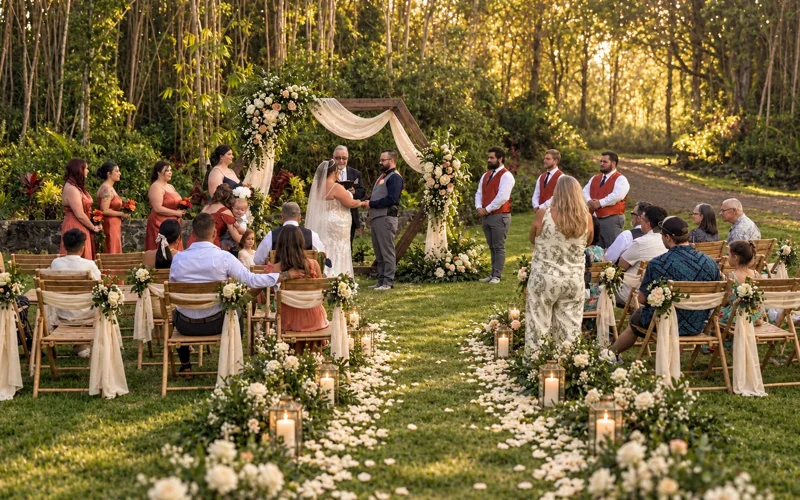
Couple exchanging vows during a Koa’s lawn ceremony
View this setup in the full gallery →Guest ordering a signature drink from Koa’s Mobile Bar
View this setup in the full gallery →Tropical dinner table with candles and colorful island florals
View this setup in the full gallery →Vintage phone audio guestbook station with candles and florals
View this setup in the full gallery →Koa’s pavilion surrounded by lush tropical landscaping
View this setup in the full gallery →Sweetheart table with navy and rust draping, candles and tropical florals
View this setup in the full gallery →Keep reading